Stretch marks are scar-like streaky areas that appear in overstretched skin. Underlying tissue expansion is the most common cause, so they develop most often during the growth spurt in adolescence and on the expanding abdomen in the third trimester of pregnancy.
They can also occur in body builders, as a consequence of rapid weight gain, and in some medical conditions where the skin is exposed to excess amounts of a hormone called cortisol. Early stretch marks are usually red or purple. Over time, stretch marks lose their color and become white or silvery in appearance.
Stretch marks aren’t harmful to your health. Read on to learn more about stretch marks, what causes them and who is at risk.
Types Of Stretch Marks
Types of stretch marks can be broken down into two main stage classifications based on their formation and appearance:
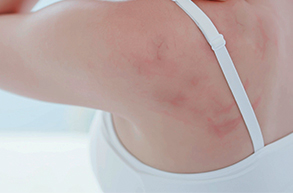
- Striae rubrae (pink / red ) - The earliest physical indications of overstretched skin. Signs of inflammation due to overstretching are most apparent at this stage and the affected skin turns pink / red in color.
- Striae albae (white) - Stretch marks become more scar-like, irregularly shaped, hypopigmented (faded / white), or wrinkly in texture. Progression from striae rubrae to striae albae is gradual and can take several months to years.
Other classifications when it comes to types of stretch marks include:
- Striae gravidarum: Stretch marks which occur as a result of pregnancy.
- Striae nigrae (dark grey or black) - Usually applicable to darker complexion skin types.
- Striae caerulea (dark blue / purplish) - Also applicable to those with darker complexions.
- Striae atrophicans: Thinned skin associated with stretch marks – This may develop in those with Cushing’s syndrome, due to the prolonged use of corticosteroids or after a surgical procedure.
Common Causes Of Stretch Marks
Collagen and elastin give the skin its taut shape. They break when the skin is stretched and shrunk. During the healing process, stretch marks may appear on the skin. The most common causes of stretch marks include:
- Pregnancy weight gain and an increase in the size of breasts and abdomen
- Rapid weight gain that causes the skin to stretch
- Extreme weight loss that causes the skin to shrink
- Muscle hypertrophy or an increase in muscle size
- Hormonal changes and growth spurts that happen during puberty
- Cosmetic surgery such as breast augmentation
- Endocrinopathies (Cushing syndrome)
- Side effect of topical corticosteroid use
- Have a family member with stretch marks
What Stretch Marks Look Like
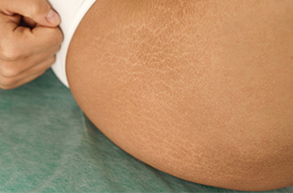
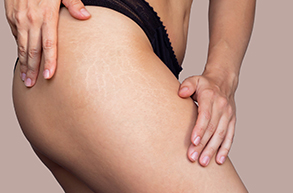
Not all stretch marks look the same. They can vary depending on where they appear on your body, how long you’ve had them, and what caused them.
- Stretch marks may be pink, red, blue, purple, or dark brown, depending on your skin color.
- They may appear as bright streaks or bands on the skin that fade to a lighter color. Sometimes stretch marks appear to be indented or sunken.
- When they first develop, stretch marks tend to be slightly raised and can feel itchy.
- They may appear on the abdomen, breasts, hips, buttocks, or other places on the body. It’s common for stretch marks to fade over time. But they may never disappear entirely.
Prevention And Treatment Of Stretch Marks
Stretch marks naturally fade and usually become less conspicuous over time, so in many cases, treatment may not be necessary. Various treatments have been used in the management of red, purple or white stretch marks. While some creams may improve the appearance of early stretch marks, lasers and IPL (Intense Pulsed Light) therapy may also be beneficial.
For more discussion about stretch mark treatments, please check out our article How To Treat Stretch Marks.
When To See A Doctor
Stretch marks happen naturally, and the marks themselves don’t pose any cause for concern.
Since they can happen as a sign of underlying health conditions, consult a dermatologist about your stretch marks, especially if you’ve noticed other unusual symptoms, such as:
- unexplained weight gain
- skin that seems thin, bruises easily, or heals slowly after injuries
- muscle weakness and fatigue
- a general sense of unwellness
If you haven’t had much success with your attempts to minimize the appearance of your stretch marks at home, a dermatologist can offer more support and guidance on your options.
How To Make Stretch Marks Less Noticeable?
Stretch marks are very common for people of all ages. If your stretch marks are a cosmetic issue for you, there are ways you can hide them or improve their appearance.
- Use makeup. If you just want to cover up some of your stretch marks for a day or a night, using a foundation makeup that matches your skin tone can help hide your stretch marks.
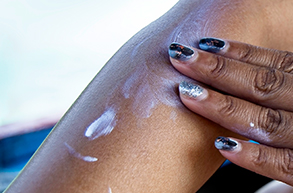
- Use topical cream or ointment. There are many topical creams that claim to help make stretch marks go away. Be sure to read reviews and find out what is and isn’t working for people.
- Wear clothes with more coverage. Wearing long sleeves or longer pants can cover up areas that are affected by stretch marks.
Takeaway
Stretch marks are indented streaks that appear on the abdomen, breasts, hips, buttocks or other places on the body. Common causes are growth spurts, weight changes, and pregnancy.
The appearance may be lessened by using makeup, ointments, or surgical treatment. Stretch marks often fade over time, with or without treatment. Sometimes when the cause of the stretching is no longer a factor, stretch marks will fade to a less noticeable scar.
Call your doctor if you notice an increase in stretch marks or if they cover a large area of your body. Your doctor may be able to help you figure out what is causing them and suggest treatment options.